


02 Jul Your Backyard Jungle Called. It Wants an Exit Strategy.
There’s a particular kind of Sydney homeowner denial that only applies to trees. You’ll fix a wobbly fence paling within a week. A dripping tap gets sorted by the weekend. But a 15-metre gum tree leaning a bit more than it used to, dropping branches the size of surfboards onto the back lawn? That gets a shrug and a “yeah, I’ll get someone to look at it eventually.”
Eventually usually arrives with a storm warning.
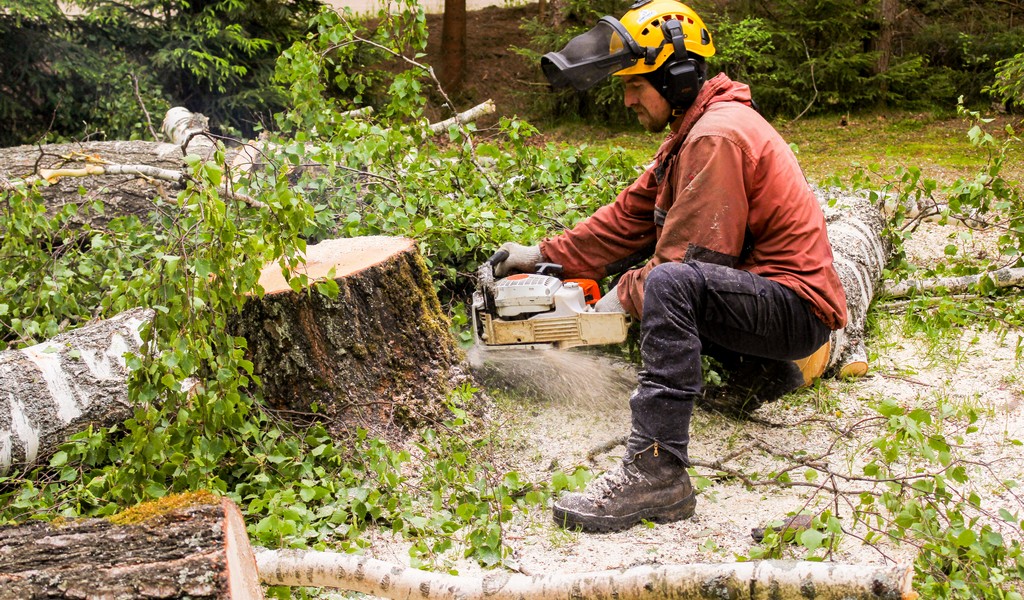
Sydney’s got one of the leafiest urban canopies of any Australian city, which is lovely for property values and shade in January, and slightly less lovely when a north-easterly rolls through and every second street has a branch across it. Whether you’re in the sandstone gullies of the North Shore, the wind-battered ridgelines of the Northern Beaches, or a tight inner-west block where the neighbour’s fig has ideas about your foundations, trees eventually ask something of you. This guide walks through what to actually do about it — the how, the why, and the “is this even a DIY job” question that far too many people answer wrong with a chainsaw from Bunnings.
Why Sydney Trees Need More Attention Than You’d Think
Sydney’s growing conditions are a double-edged secateur. Good rainfall, decent soil in most pockets, and a subtropical-adjacent climate mean trees here grow fast — often faster than their root systems can properly anchor, especially on the sandy soils around the Northern Beaches or the clay-heavy pockets further inland. Add in storm season, which seems to start earlier every year, and you’ve got a recipe for branch failure, trunk splitting, and the occasional tree deciding gravity looks more appealing than standing upright.
Then there’s the human factor. A lot of Sydney’s tree cover was planted decades ago without much thought for where the driveway, the pool, or the second-storey extension would eventually go. Trees that were once a tidy feature in the corner of the yard are now shading out the solar panels, cracking the pavers, or getting uncomfortably close to the powerlines. None of that is the tree’s fault — it’s just doing what trees do. But it does mean regular assessment matters more here than in a lot of other places.
If you want the deeper dive on what’s actually going on with your trees before you decide on anything drastic, our tree services page runs through the full range of what we handle, from routine maintenance right through to full removals.
What to Do When a Tree Has Genuinely Had It
Not every dodgy-looking tree needs to come down. But some genuinely do, and figuring out which category yours falls into is the first real decision point.
Signs it might be removal time rather than a trim-and-hope situation:
- Significant lean that’s changed recently. A tree that’s always grown at an angle is one thing. A tree that’s started leaning more over the last few months is a structural red flag.
- Fungal growth at the base or on the trunk. Bracket fungi, especially, often point to internal decay that isn’t visible from the outside.
- Deadwood throughout the canopy, not just a branch or two.
- Cracks or splits in major limbs or the trunk, particularly after wind events.
- Root damage from nearby construction, trenching, or even a driveway extension.
- Proximity to structures, powerlines, or high-traffic areas combined with any of the above.
If a couple of these are ticking boxes, it’s worth getting eyes on it rather than guessing. Our team handles everything from single backyard removals to full-scale jobs on tricky, tight-access blocks — you can read through the full breakdown on our tree removal and felling page. We come out, have a proper look, and tell you straight whether it’s a removal, a trim, or something you can honestly leave alone for another year.
That last bit matters, by the way. A decent tree company should be talking you out of unnecessary removals as often as recommending them. Removing a perfectly healthy tree because it’s “a bit messy” is expensive, it’s a loss to the local canopy, and half the time the actual fix is a good prune.
The Case for Trimming and Pruning Before It Gets Drastic
This is the bit most homeowners skip, and it’s genuinely the cheapest insurance policy you can buy for your trees. Regular trimming and pruning isn’t just about tidiness — it’s how you keep a tree structurally sound, reduce the wind load on a heavy canopy, and catch problems while they’re still small and manageable rather than “call an arborist at 6am during a storm” problems.
There’s also a bit of an art to it that DIY efforts tend to butcher. Cutting the wrong branch, at the wrong angle, at the wrong time of year can leave a tree more vulnerable, not less — bad cuts invite disease and pests, and over-pruning can shock a tree into weak, straggly regrowth that’s worse than what you started with. Crown reduction, deadwooding, and selective thinning are all different techniques suited to different goals, and getting it wrong is a very Sydney way to spend a Saturday and still end up needing a professional anyway.
Done properly, pruning also solves a bunch of everyday annoyances: branches scraping the roof, canopy blocking light to the veggie patch, limbs creeping toward the powerlines before Ausgrid comes and does it far less delicately than we would. Have a look at our tree trimming and pruning page for the specifics on how we approach it season by season.
Stumps: The Backyard’s Most Stubborn Souvenir
Getting the tree down is only half the job. What’s left behind is a stump that, left alone, will happily sit there for years, sprouting suckers, attracting termites, and quietly becoming a tripping hazard your kids or your ride-on mower will find eventually.
Digging a stump out by hand is one of those tasks that sounds achievable until you’re two hours in with a mattock and a lot of regret. Professional stump grinding is faster, far less destructive to the surrounding lawn and garden beds, and gets the stump down below ground level so you can actually landscape, turf, or pave over the spot without a woody lump reminding everyone what used to be there. It also removes the risk of regrowth from species that are determined to sucker back to life given half a chance — camphor laurels being a classic Sydney offender.
If there’s a stump (or six) lurking in the yard from a job someone else did years ago, or from your own recent removal, check out our stump grinding and removal page — it’s often a much smaller job, and cost, than people expect.
Land Clearing and Site Prep: Getting a Block Ready to Actually Do Something
Whether you’re prepping for a new build, clearing an overgrown block you’ve just bought, or trying to make a rural or semi-rural property usable again, land clearing is a different beast from a standalone tree removal. It usually means multiple trees, undergrowth, scrub, and site debris all needing to go, often to a timeline set by a builder or a council approval.
This is where experience with Sydney’s specific regulations really counts. Between council tree preservation controls, bushfire-prone land requirements, and the occasional protected species popping up where you least expect it, land clearing done wrong can mean fines, delays, or a building certifier knocking back your project. Done properly, it means a clean, usable site handed over on schedule, with vegetation cleared to the right standard and debris dealt with responsibly rather than left in a heap for the next owner to deal with.
Our land clearing and site preparation page covers how we scope these jobs, from small suburban blocks through to larger acreage work out toward the fringes of greater Sydney.
Where All That Green Waste Actually Goes
Here’s something a lot of homeowners don’t think about until they’re staring at a mountain of branches, offcuts, and mulch: what happens to it afterwards. Every tree job — removal, pruning, clearing — generates a genuinely surprising volume of waste, and dealing with it yourself usually means multiple trailer runs to the tip, if you’ve even got a trailer and the patience for it.
A decent portion of what comes off your trees doesn’t need to be waste at all. Timber and branch material can be chipped down into mulch, which goes straight back onto garden beds to retain moisture, suppress weeds, and slowly feed the soil as it breaks down — which is a pretty neat, low-effort way to close the loop on a tree job. We run this through our tree mulching and woodchipping page, and it’s one of the more satisfying parts of the process — turning what used to be a problem branch into next season’s garden fertiliser.
Whatever can’t be mulched or reused — root balls, non-organic debris, general site rubbish — gets hauled away properly rather than left for you to sort out. Our rubbish removal service covers exactly that end of the job, so you’re not left with a skip bin’s worth of green waste sitting on the verge for three weeks.
What Actually Happens When You Book a Job?
For anyone who’s never used a tree service before, the process is a lot less complicated than the job itself might look:
- You get in touch — phone, form, or a quick photo of the offending tree. Most quotes can be roughly scoped from a description and a couple of pictures.
- A proper site assessment. Someone comes out, actually looks at the tree, the access, the surrounding structures, and any council considerations, rather than pricing blind.
- A clear, itemised quote. What’s included, what’s optional (stump grinding is a classic “ask if it’s in there”), and a realistic timeframe.
- The work itself, carried out with the right gear for the access and the risk — rigging, cranes, or good old-fashioned climbing gear depending on what the site demands.
- Full clean-up. Mulching, hauling, and leaving the site tidier than we found it, not just “technically done.”
Straightforward, but the details in step two and three are where a good job and a bad one really diverge. Anyone who quotes a tree removal without actually seeing the tree is guessing, and guesses have a habit of turning into surprise invoices.
The Real Benefits of Staying on Top of It
Beyond the obvious “tree isn’t going to fall on the shed” benefit, keeping on top of tree care pays off in ways people don’t always connect back to the trees themselves:
- Property value and street appeal — a well-maintained canopy reads as a well-maintained property, full stop.
- Insurance and liability peace of mind — a documented history of maintenance matters if a branch ever does cause damage.
- Safer outdoor spaces for kids, pets, and anyone who parks under that one tree everyone’s slightly nervous about.
- Healthier gardens overall, thanks to better light penetration and the mulch loop mentioned above.
- Fewer emergency callouts, which are more stressful and usually pricier than planned work booked in advance.
None of that requires obsessive attention — a periodic check-in, especially before and after storm season, covers most of it.
FAQs
Do I need council approval to remove a tree in Sydney? Often, yes — many councils across Sydney require permits for trees above a certain size, or for particular protected species, regardless of whether the tree is on your own property. Rules vary between local government areas, so it’s worth checking before assuming a tree is yours to remove freely. We can advise on this as part of an assessment.
How do I know if I need pruning or full removal? If the tree is structurally sound and the issue is size, shape, or clearance, pruning usually solves it. If there’s significant decay, dieback, root damage, or a structural fault, removal tends to be the safer long-term call. A site visit is really the only reliable way to tell.
Is stump grinding included with tree removal? Not always — it’s frequently quoted as a separate line item, so it’s worth confirming upfront rather than assuming it’s bundled in.
What happens to the wood and branches after a job? Most of it gets chipped into mulch, which can be left on-site for your garden or taken away, depending on what you’d prefer. Anything unsuitable for mulching is removed as part of the clean-up.
How quickly can emergency tree work be arranged? Storm damage and genuinely hazardous trees are typically prioritised and can often be actioned same-day or next-day, depending on severity and access.
Does removing a tree affect my neighbours? It can, particularly with boundary trees or root systems that cross property lines. Worth a conversation with your neighbour before work starts, and we’re happy to talk through the practicalities if it’s a shared situation.
Getting Sorted
None of this needs to be complicated, and it definitely doesn’t need to be a DIY chainsaw adventure that ends with a call to your insurer. Whether it’s one dodgy tree, a full clean-up before a build, or just a backyard that’s gotten away from you over a few busy years, the fix is usually simpler and more affordable than people expect once someone’s actually had a look.
Have a browse through more tips and real Sydney job stories on our blog, or if you’d rather skip straight to sorting your own patch of green chaos, get in touch through our contact page for a free assessment and quote.