


01 Aug Safe & Affordable Tree Removal in Sydney: A Homeowner’s Complete Guide
Every suburb in Sydney has one. You know the tree. The one leaning a bit too casually over the Colorbond fence, the one dropping branches on the trampoline every time there’s a stiff southerly, the one your neighbour keeps “meaning to mention” at the next barbecue. Aussies are famously laid-back about a lot of things — but a 15-metre gum with a taste for gravity right above the Hills Hoist is not one of them.
This is the honest, no-jargon guide to getting your trees, gutters and yard sorted properly in Sydney — written for homeowners who’d rather understand what they’re paying for than just nod along to a quote. We’ll cover what arborists actually do, how tree removal really works, what stump grinding involves, when council gets involved, and why “just whip out the chainsaw yourself” is one of the more expensive mistakes you can make in this city.
Why Sydney’s Trees Keep Everyone on Their Toes
Sydney’s climate is basically a greenhouse with a harbour view — warm, humid summers, decent rainfall, and soil that let native species like blue gums, spotted gums and Sydney red gums shoot up fast. Great for the tree. Less great for the roof, the retaining wall, or the power line it’s slowly growing into.
Add in our storm season (hello, east coast lows and those wild summer hail events) and you’ve got a recipe for sudden limb failure, split trunks, and the occasional “why is there a branch in my pool” phone call. A tree that looked perfectly healthy in March can be a genuine hazard by November if it hasn’t been inspected. That’s really the whole case for regular tree care — it’s cheaper and safer to manage a tree than to clean up after one.
So What Does an Arborist Actually Do?
“Arborist” gets thrown around loosely, but a properly qualified one is basically a tree doctor — trained in how trees grow, where they’re structurally weak, what diseases and pests are doing the rounds locally, and how to bring a tree down (or just tidy it up) without turning your garden into a demolition site.
The team at Sydney Tree Felling has spent well over a decade climbing, assessing and (when needed) removing trees right across the metro area, from the Hills District to the Eastern Suburbs and everywhere in between. What separates a proper crew from a bloke with a ute and a chainsaw is the boring-but-important stuff: qualifications, insurance, a genuine understanding of tree biology, and the equipment to do the job without dropping a limb through your pergola.
Tree Removal: When It’s Time to Say Goodbye
Not every tree needs to go. But some genuinely do — dead or dying trees, ones with serious trunk decay, storm-damaged specimens hanging on by a thread, or trees whose roots have decided your sewer line looks tastier than the soil around it.
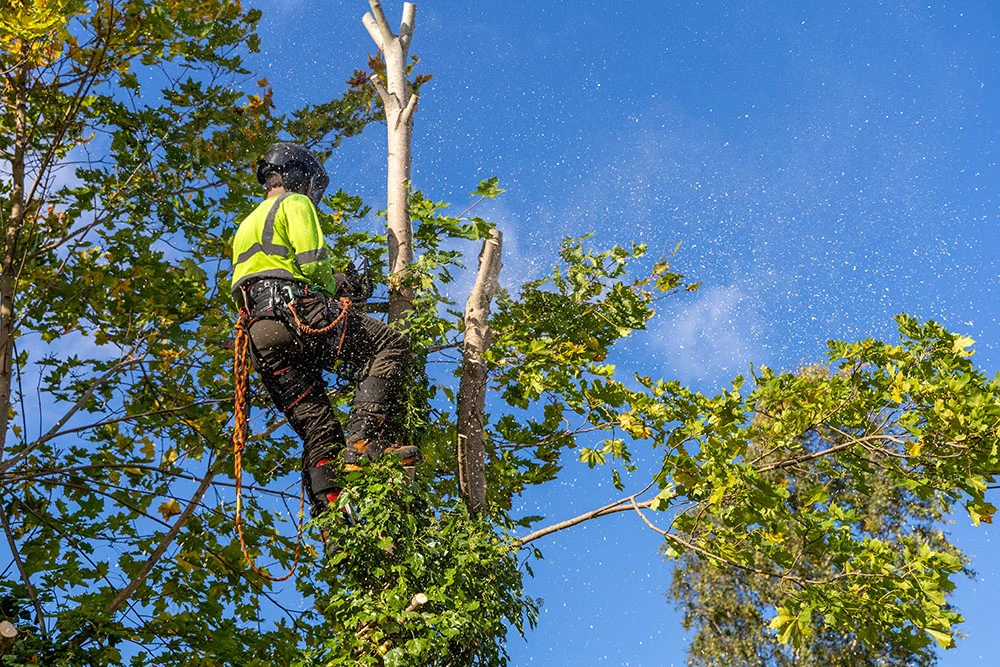
A proper tree removal and felling job generally follows a pretty consistent process:
- Assessment – the arborist checks the tree’s health, lean, structural integrity, and what’s around it (house, powerlines, neighbour’s shed, your prized veggie patch).
- Council check – more on this below, but this step gets skipped by cowboys far too often.
- The plan – rigging, rope access, or a crane, depending on size and access. Tight inner-city backyards often need a completely different approach to a wide-open Hills District block.
- The felling itself – done in sections for anything with limited fall clearance, so nothing lands where it shouldn’t.
- Clean-up – timber cut to size, debris cleared, and the site left tidier than they found it.
Costs vary a fair bit depending on tree size, access, and whether council approval is required, but as a rough Sydney-wide guide: small trees tend to sit somewhere in the low hundreds, medium trees creep into four figures, and large, tricky removals (think mature eucalypts near power lines) can run considerably higher once crane hire or traffic management gets involved. Getting an on-site quote is really the only way to know for sure — every yard’s different.
Trimming and Pruning: The Maintenance Your Trees Actually Need
Pruning isn’t just cosmetic — done properly it improves airflow, reduces disease risk, takes weight off weak limbs before a storm does it for you, and can genuinely extend a tree’s life. Done badly (looking at you, backyard “lopping” with a handsaw and a ladder), it can stress the tree, encourage weak regrowth, or leave wounds that invite rot.
Professional tree trimming and pruning covers things like crown thinning, crown reduction, deadwooding (removing dead limbs before they drop themselves), and clearance pruning to keep branches off the roofline or out of the powerlines. Late winter through early spring is generally the sweet spot for most deciduous and many native species in Sydney, though anything storm-damaged or diseased should be dealt with whenever it’s spotted, not left for “the right season.”
Stump Grinding: Getting Rid of the Evidence
Cutting a tree down is only half the job — what’s left behind is a stump that’ll happily send up suckers for years, attract termites, and trip up anyone mowing the lawn after dark. Stump grinding uses a specialised grinder to chew the stump down below ground level, roots and all, leaving you with a flat, plantable, mower-friendly patch rather than a wooden landmine.
It’s a quick job for the right equipment but a genuinely miserable one without it, which is why most homeowners sensibly leave it to a crew who does it every day.
Land Clearing: Starting From Scratch
Renovating, subdividing, building a granny flat, or just reclaiming an overgrown block? Land clearing and site preparation covers everything from selective vegetation removal to full-site clearing, done with an eye on drainage, erosion, and — again — council and biodiversity requirements, which can be surprisingly strict depending on the LGA and whether there’s any protected vegetation or habitat value on site.
Mulching and Woodchipping: Turning Waste into Garden Gold
Here’s the bit that feels genuinely satisfying — instead of trucking every branch and offcut to landfill, a decent tree service will chip it on-site. Tree mulching and woodchipping turns what used to be your problem tree into fresh mulch that suppresses weeds, locks in soil moisture through Sydney’s dry spells, and slowly feeds the garden as it breaks down. It’s about as close to a full-circle moment as tree work gets.
Rubbish Removal: Because Nobody Wants a Skip Bin Reunion Tour
Whether it’s leftover branches, old fencing, a rotten garden shed, or general property clean-up debris, rubbish removal is one of those services people don’t think about until they’re staring at a trailer-load of green waste with nowhere to put it. Bundling it in with your tree job saves you a second call-out, a hired trailer, and a very awkward drive to the tip.
Gutter Cleaning: The Unsung Hero of Tree Care
Anyone with a decent-sized tree near the house already knows this pain — leaves, bark and seed pods in the gutters, blocking downpipes right when you need them most (read: the middle of a Sydney storm). Regular gutter cleaning prevents water overflow, roof damage, and the kind of ceiling stain that turns into a much bigger bill down the track. It’s a small job that pairs naturally with any tree trim, since the crew’s already up there anyway.
Do You Actually Need Council Approval?
Short answer: probably, and it’s worth checking before anyone picks up a chainsaw. Greater Sydney runs on a patchwork of council-by-council rules — Tree Preservation Orders, Development Control Plans, and Local Environmental Plans — and what’s exempt in one LGA might need a full application two suburbs over.
As a rough rule of thumb, trees under a certain height and trunk diameter, along with a handful of recognised weed and pest species (think camphor laurel, privet, cocos palm), are commonly exempt across many councils. But heritage-listed properties, significant tree registers, and habitat trees can override all of that — and removing a protected tree without approval can carry genuinely hefty fines. When in doubt, treat it as “approval needed” until a council or arborist confirms otherwise. A good local operator will usually flag this during the quote, not after the tree’s already on the ground.
Picking the Right Crew (Without Getting Burned)
A few honest questions before you sign anything:
- Are they insured? Public liability matters enormously when there’s a two-tonne tree limb involved.
- Are they qualified? Look for recognised arboriculture qualifications, not just “years of experience.”
- Do they explain the process? A tradie who’s happy to walk you through what’s happening and why is usually one worth hiring.
- Do they clean up properly? If mulching, wood removal and site clean-up aren’t part of the quote, ask why.
Sydney Tree Felling ticks these boxes as a locally owned, licensed and insured operation working across the greater Sydney region — but honestly, ask any tree service these same questions. It’s the fastest way to separate the professionals from the weekend warriors.
A Few Real Questions People Ask Us
Do I need a permit to trim my own tree, or just remove it? Pruning generally faces fewer restrictions than full removal, but some councils still regulate significant pruning of protected or significant trees. If it’s more than a light trim, it’s worth a quick council check first.
How much does tree removal actually cost in Sydney? It depends heavily on tree size, access, and whether a permit or traffic control is needed — small trees tend to be a few hundred dollars, large or awkward removals can run into the thousands. An on-site quote is the only accurate way to know.
What happens to the wood and branches after removal? Most reputable services will chip smaller material into mulch on-site and can arrange removal of larger logs or full rubbish clearance, so you’re not left staring at a pile of timber.
Is stump grinding included with tree removal, or a separate cost? It varies by provider — some include it, others quote it separately depending on stump size and access. Always ask upfront so there are no surprises.
How often should gutters be cleaned if I’ve got trees nearby? Twice a year is a sensible baseline for most Sydney properties, with an extra check after any major storm or if you’ve noticed overflow during heavy rain.
Can I remove a tree myself to save money? Technically sometimes, legally rarely, and safely almost never once a tree’s past a certain size. Between council approval, structural risk, and the gear required, it’s one of the least DIY-friendly jobs in home maintenance.
Wrapping It Up
Trees are one of the best things about living in Sydney — shade in summer, birdlife, a bit of green between the rooftops. They’re also, occasionally, a genuine hazard that needs a professional eye rather than a hopeful one. Whether it’s a full removal, a seasonal prune, a stubborn stump, or gutters clogged with a year’s worth of leaf litter, sorting it properly the first time beats dealing with the consequences later.
If you’ve got a tree situation brewing — or just want an honest opinion on whether that lean is “fine” or “call someone” — get in touch with the team for a free inspection and quote. And if you’re after more tips on keeping your patch of Sydney green, safe and storm-ready, there’s more over on the blog.